
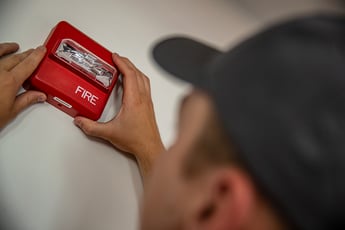
 A professional fire alarm inspection confirms that your system can detect an emergency, notify occupants, communicate with monitoring services, and support the response your building depends on.
The exact inspection schedule depends on the system, its components, the adopted code edition, your local Authority Having Jurisdiction, and any additional insurance or facility requirements. For many commercial systems, that means routine visual checks, semiannual inspection of certain components, annual functional testing, and separate testing cycles for equipment such as smoke detectors.
At CertaSite, fire alarm inspection and testing is part of a coordinated fire protection program that includes service, monitoring, documentation, deficiency support, and related life safety systems. The goal isn’t simply to complete an inspection. It’s to help you understand your system’s condition and know what needs to happen next.
Why Fire Alarm Inspection and Service Matter?
Fire alarms are often your building’s first line of defense. They detect signs of danger, notify the people inside, and may transmit signals to a monitoring station or emergency responders.
That response depends on more than the fire alarm control panel. Smoke and heat detectors, pull stations, horns, strobes, speakers, batteries, notification circuits, waterflow devices, supervisory signals, and communication equipment all need to work together.
Regular inspection and testing help identify problems such as:
- Weak or failed backup batteries
- Dirty, damaged, or obstructed detectors
- Notification devices that don’t operate correctly
- Communication failures with the monitoring station
- Devices that’ve been removed, covered, or disconnected
- Building changes that affect system coverage
- Trouble or supervisory signals that haven’t been resolved
CertaSite’s guide to Fire Alarm System Inspection Requirements explains how routine checks, professional inspections, and annual testing support long-term system reliability. The NFPA 72 National Fire Alarm and Signaling Code provides the primary safety provisions for fire detection, signaling, emergency communications, inspection, testing, and maintenance.
A fire alarm system doesn’t need much attention when everything’s working. The inspection is how you make sure it earns that quiet.
How Often Do Fire Alarm Systems Need Inspection?
Fire alarm inspection frequency isn’t the same for every component. Different parts of the system may follow different visual inspection, functional testing, maintenance, and sensitivity-testing schedules.
Many commercial fire alarm programs include semiannual visual inspections of system components and annual functional testing. Routine owner or facility checks may happen more frequently, while smoke detector sensitivity testing and certain equipment-specific activities can follow separate cycles.
Your actual schedule may depend on:
- Fire alarm system type and age
- Device types and quantities
- Local code adoption
- AHJ expectations
- Manufacturer instructions
- Insurance requirements
- Previous inspection results
- Building renovations or occupancy changes
- Monitoring and supervising station requirements
NFPA guidance notes that many alarm components are inspected semiannually for visible damage and tested annually to confirm operation. OSHA’s fire detection system requirements also require employers to maintain systems in operable condition and have them tested, adjusted, serviced, and maintained as needed by trained people who understand the equipment.
CertaSite’s Inspection Cycles for Fire and Life Safety Systems provides a broader look at how inspection frequencies can differ by system and component.
The easiest way to manage those moving dates is to build a recurring schedule around the actual equipment in your building. “We inspect it every year” is useful. “We know what gets inspected, tested, and documented at each interval” is better.
What Is Included in a Fire Alarm Inspection?
A professional fire alarm inspection evaluates the condition of the system and confirms that its connected components can operate as intended.
The exact scope depends on the system, but a typical service visit may include reviewing the control panel, initiating devices, notification appliances, power supplies, monitoring communication, sprinkler supervisory connections, and accessible system documentation.
Common inspection and testing points include:
- Fire alarm control equipment: Panel condition, displayed signals, programming status, and communication with connected devices
- Initiating devices: Smoke detectors, heat detectors, duct detectors, pull stations, and other devices that start an alarm
- Notification appliances: Horns, strobes, speakers, and voice evacuation equipment
- Power supplies: Primary power, backup batteries, charging equipment, and related trouble signals
- Sprinkler connections: Waterflow alarms, valve supervisory switches, and other sprinkler-related inputs
- Monitoring communication: Transmission of alarm, supervisory, and trouble signals where applicable
- Remote equipment: Annunciators, auxiliary panels, relays, and connected emergency functions
- System condition: Damage, obstruction, contamination, tampering, or building changes that may affect performance
CertaSite’s fire alarm service includes inspection, testing, maintenance, installation, and support for conventional and addressable systems. That broader service approach helps connect the inspection results with the maintenance or repair work that may need to follow.
A complete inspection shouldn’t feel like someone glanced at the panel, nodded thoughtfully, and left. It should give you a clear picture of how the system performed.
What Happens Before Fire Alarm Testing Begins?
Before technicians activate devices or transmit signals, they should coordinate the test with the appropriate people.
That may include notifying:
- Facility contacts
- The monitoring station
- Security personnel
- Employees and tenants
- Other teams that could be affected
In some buildings, testing may also involve elevator recall, HVAC shutdown, door release, sprinkler signals, or other connected functions.
Good pre-test coordination helps prevent unnecessary disruption and false emergency dispatches. It also gives the facility a chance to confirm which areas are accessible, whether special work permits are needed, and whether testing must be phased around operations.
For monitored buildings, the technician should confirm how the account will be placed on test and how signals will be verified before monitoring returns to normal. CertaSite’s professional alarm monitoring service uses UL-listed monitoring stations that operate around the clock, which makes coordination and signal verification an important part of system service.
No one wants the annual alarm test to become the building’s most convincing surprise drill.
Can Another Company Inspect My Fire Alarm System?
In many cases, yes. A qualified fire alarm company can often inspect and test a system installed or previously serviced by another provider.
However, not every company can fully inspect, program, troubleshoot, or repair every fire alarm brand. Some systems use proprietary software, restricted programming tools, manufacturer credentials, or access codes that may limit what a new provider can do.
Before switching inspection companies, confirm:
- Whether the provider is licensed or qualified in your jurisdiction
- Whether its technicians are trained on your alarm brand
- Whether the company can access panel programming and system history
- Whether your current contract includes cancellation or ownership restrictions
- Whether monitoring will remain active during the transition
- Whether previous inspection reports and as-built documents are available
- Whether warranties or manufacturer agreements will be affected
- Whether the provider can complete repairs after identifying deficiencies
CertaSite is authorized and trained to work on many major fire alarm brands, including Silent Knight, Fire-Lite, Siemens, and Bosch. Still, the right provider should review your exact system before promising a complete transition.
If you’re comparing inspection providers, CertaSite’s 5 Questions You Should Ask a Fire Protection Company can help you evaluate qualifications, service scope, reporting, and long-term support.
The inspection itself is only part of the decision. You also need to know who can fix what they find.
What Documentation Do You Get After an Inspection?
After a fire alarm inspection, you’ll typically receive documentation that explains what was inspected, what was tested, what passed, what didn’t, and what needs attention.
A strong fire alarm inspection report should include:
- Facility and system information: Building location, panel type, system description, and inspected areas
- Service details: Inspection date, testing frequency, technician, and company information
- Components tested: Devices, circuits, panels, batteries, monitoring signals, and connected functions
- Results: Pass, fail, not tested, inaccessible, or another applicable status
- Deficiencies: Clear descriptions of problems found and their locations
- Corrective recommendations: Repairs, replacements, cleaning, programming, or follow-up testing
- Supporting information: Device lists, notes, photographs, and signal records where appropriate
- Next steps: Repair priorities, additional service needs, and the next scheduled inspection
OSHA’s fire detection system guidance emphasizes maintaining systems in operating condition, using trained people for service and testing, and returning equipment to normal operation promptly after testing or activation. Thorough reports help demonstrate what was completed and what still requires follow-up.
CertaSite technicians document inspections, repairs, discrepancies, and recommendations, and customers can access that information through CertaSite’s reporting tools and customer portal.
A report shouldn’t leave your team asking whether the system passed, almost passed, or passed except for the part everyone should be worried about.
What Happens If the Inspection Finds a Deficiency?
During an inspection, a deficiency is a condition that prevents part of the fire alarm system from meeting applicable requirements or operating as expected.
Common fire alarm deficiencies include:
- Weak or failed batteries
- Dirty or obstructed detectors
- Failed notification devices
- Monitoring communication problems
- Damaged pull stations
- Unresolved panel trouble signals
- Missing or disconnected devices
- Inaccessible equipment
- Building changes that affect device coverage
When a deficiency is found, the report should explain what the issue is, where it’s located, and what corrective action is recommended. Some problems may be routine repairs, while others can affect system operation and require faster attention.
CertaSite’s guide to What Is a Deficiency explains how deficiencies can range from recommended improvements to inoperable conditions that require immediate action.
After repairs are completed, affected components may need to be retested and the documentation updated. Fixing the device is important. Closing the loop in the report is what keeps the paper trail from developing its own trouble signal.
Does Fire Alarm Monitoring Get Tested During Inspection?
Monitoring communication is often part of fire alarm testing when the system transmits signals to a supervising station.
Technicians may verify that alarm, supervisory, and trouble signals reach the monitoring station correctly and are associated with the right account and event type. They may also confirm restoration signals after devices and circuits return to normal.
Monitoring tests should be coordinated in advance so the account can be placed in the appropriate test status and unnecessary dispatches can be avoided. Once testing is complete, the system and monitoring account should be returned to normal service.
UL’s fire alarm service certification guidance explains how central station service can include signal monitoring, retransmission, testing, maintenance, runner service, certification, and recordkeeping.
Testing the detector without confirming where its signal goes is a little like checking the doorbell without seeing whether anyone can hear it.
Can Fire Alarm and Sprinkler Inspections Be Bundled?
Yes, fire alarm and sprinkler inspections can often be bundled under one recurring fire protection service agreement.
That can be especially useful because the systems are connected. Sprinkler waterflow switches and valve supervisory devices commonly report through the fire alarm system, which means inspection findings on one side can affect testing on the other.
Bundling fire alarm inspection with fire sprinkler service can provide:
- Better coordination of inspection schedules
- Fewer service visits and vendor handoffs
- More consistent reports and deficiency tracking
- Clearer testing of connected alarm and sprinkler functions
- Simpler budgeting and service planning
- One point of contact for follow-up repairs
- Better visibility across multiple facilities
CertaSite’s broader fire protection services bring fire alarms, sprinklers, extinguishers, suppression, monitoring, emergency lighting, and related systems into one coordinated program. CertaSite’s guide to Fire Protection and Life Safety Systems also explains how those systems support the same overall safety plan.
Bundling won’t change what each system requires. It’ll simply make those requirements easier to schedule, document, and manage.
What Should Be Included in a Fire Alarm Service Agreement?
A fire alarm service agreement should explain more than the price of an annual inspection. It should define the scope, schedule, documentation, repair support, and responsibilities on both sides.
Look for an agreement that addresses:
- Inspection and testing frequencies
- Devices and systems included in the scope
- Monitoring and signal-testing responsibilities
- Digital reporting and record access
- Deficiency identification and repair quotes
- Emergency and after-hours service options
- Battery, detector, or device replacement terms
- Support for AHJ inspections
- Multi-location scheduling and reporting
- Coordination with sprinkler or suppression systems
- Exclusions, access requirements, and customer responsibilities
The agreement should also explain what happens after a failed test. Identifying an issue is useful, but a dependable provider should make the repair process and next steps clear.
CertaSite’s fire alarm service agreements are designed to coordinate inspection, testing, maintenance, and related life safety needs so customers aren’t left managing separate schedules and reports on their own.
A good agreement answers questions before inspection day. A vague one waits until there’s a problem and introduces everyone to the fine print.
How to Prepare for a Fire Alarm Inspection?
A little preparation can make inspection day smoother and help technicians complete the required testing without unnecessary delays.
Before the visit:
- Confirm access to the fire alarm panel, devices, electrical rooms, mechanical areas, and tenant spaces
- Notify employees, tenants, security, and other affected teams
- Coordinate with the monitoring station
- Gather previous inspection reports and open deficiency records
- Provide current emergency contact information
- Identify recent renovations, occupancy changes, or device modifications
- Confirm whether elevators, HVAC, doors, or suppression systems will be tested
- Remove obstructions around pull stations and notification devices
- Make sure keys, passcodes, and panel documentation are available
CertaSite’s Business Fire Safety Checklist can also help facility teams review other life safety areas before an inspection.
The technician should arrive with the testing equipment. Your team shouldn’t have to supply a treasure map to the control panel.
How CertaSite Simplifies Fire Alarm Inspection and Service
At CertaSite, fire alarm inspection is part of a bigger promise: making fire and life safety more dependable, more organized, and easier to manage.
CertaSite helps businesses inspect, test, maintain, repair, monitor, and document fire alarm systems while coordinating related systems such as sprinklers, suppression, emergency lighting, and monitoring.
That means:
- Fewer disconnected vendors
- Clearer inspection reports
- Better visibility into deficiencies
- More organized service records
- Easier coordination of repairs and follow-up
- A more consistent service plan across one building or an entire portfolio
CertaSite’s approach is built to go beyond the inspection sticker. It’s about helping you know where your system stands, what needs attention, and when the next service should happen.
Common Questions About Fire Alarm Inspection and Service
How often does a commercial fire alarm system need inspection
Inspection frequency depends on the system and its components. Many components are visually inspected semiannually and functionally tested annually, while routine checks, smoke detector sensitivity testing, and other activities may follow different schedules. Local code, the AHJ, insurers, and manufacturer requirements may also affect the schedule.
What is included in a professional fire alarm inspection
A professional inspection may include the control panel, initiating devices, notification appliances, backup power, monitoring communication, remote annunciators, sprinkler signals, and connected emergency functions.
Can another company inspect my fire alarm system
In many cases, yes. The new company should be properly qualified and familiar with your system brand. Proprietary programming, current contracts, monitoring arrangements, warranties, and access to previous records may affect the transition.
What documentation should I receive
You’ll typically receive a report that identifies the system and components tested, results, deficiencies, repair recommendations, technician information, service date, and next steps.
What happens when an alarm device fails testing
The failed device or condition should be documented as a deficiency. Depending on its effect on system performance, it may require immediate repair, replacement, programming, cleaning, or follow-up testing.
Can alarm and sprinkler inspections happen during the same visit
They can often be coordinated under one service agreement, although each system must still be inspected and tested according to its own requirements. Coordinating the visits can simplify schedules, reporting, and testing of connected functions.
Does the monitoring station need to be involved
If the system is monitored, the monitoring station should generally be notified before testing. Alarm, supervisory, trouble, and restoration signals may also be verified as part of the inspection.
Stay Ready Without Managing Every Detail Alone
Fire alarm inspection involves more than choosing a date and listening to the horns. It includes device testing, monitoring coordination, documentation, deficiency follow-up, and making sure the system is returned to normal when the work is complete.
CertaSite helps make that process simpler with trained technicians, clear reporting, recurring service, monitoring support, and coordination across your broader fire protection program.
To keep your fire alarm inspection schedule on track or bundle alarm and sprinkler service, contact CertaSite to schedule service.